
Hospital Printer Maintenance
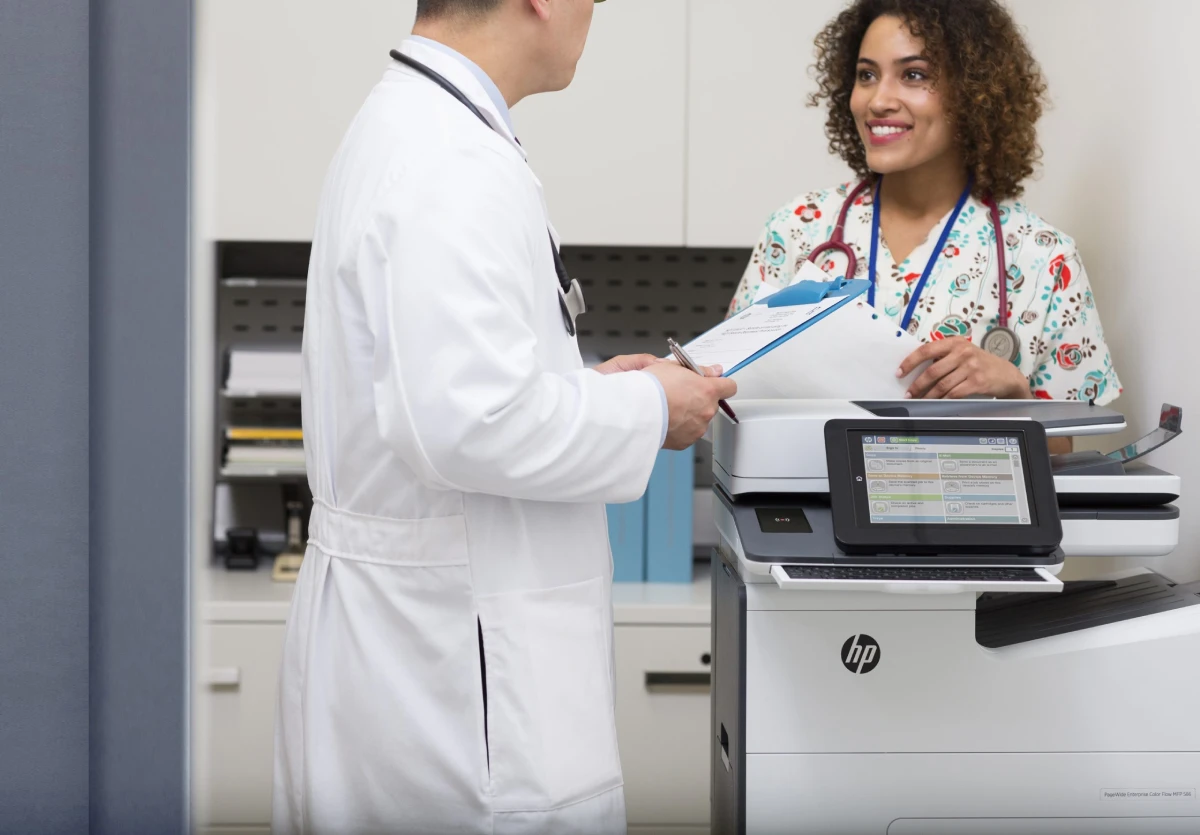
In the high-stakes environment of a modern hospital, a printer is never just an administrative convenience. It is a vital medical device that bridges the gap between the digital world of Electronic Health Records (EHR) and the physical reality of patient care. When a printer fails in a corporate office, a meeting is delayed. When a printer fails in a hospital, patient admissions stall, medication administration becomes risky, and discharge flows grind to a halt.
Effective hospital printer maintenance is about more than simply fixing paper jams or replacing empty toner cartridges; it is a strategic necessity involving patient safety, data security, and operational continuity. This comprehensive guide explores the complexities of managing a healthcare print fleet, the nuances of hospital printer maintenance contracts, and why specialized local vendors often outperform national providers in keeping these critical systems online.
The Unique Ecosystem of Healthcare Printing
To understand the requirements of hospital contract printer maintenance, one must first understand the diversity of the hardware involved. A hospital does not run on a single type of machine; it relies on a complex ecosystem of specialized devices, each playing a distinct, mission-critical role in the patient journey.
1. The Point of Admission: Zebra Thermal Printers
The patient journey typically begins at admissions. Here, Zebra thermal printers are the industry standard for producing patient wristbands. These wristbands are the single source of truth for patient identity. In this context, print quality is a safety issue.
- The Risk: If a thermal printhead is dirty, scratched, or damaged, it can create “voids” in the barcode. If a nurse cannot scan the wristband later using a Bedside Medication Verification (BMV) system, medication administration is delayed. Worse, staff may resort to manual overrides, which drastically increases the risk of human error.
- Maintenance Need: These devices require specialized technicians who understand the difference between Direct Thermal and Thermal Transfer technology. They need regular printhead cleaning, tension adjustments, and calibration to ensure scannable, high-contrast barcodes. Standard copier technicians often lack the training to service these niche but vital devices. For detailed specs on healthcare printing needs, many administrators reference Zebra Healthcare Solutions.
2. The Nursing Station: Laser Printers
Nursing stations are the bustling hubs of clinical activity. Here, HP and Lexmark laser printers churn out physician orders, discharge summaries, and patient education materials.
- The Risk: High volume leads to rapid wear on fusers, transfer belts, and rollers. A paper jam here forces nurses to leave their station to find a working machine, pulling them away from patient monitoring. Furthermore, discharge instructions must be legible to ensure patients understand their post-care regimen, a key factor in preventing readmissions.
- Maintenance Need: Proactive maintenance kits must be installed based on page counts, not just when the machine breaks. Reliable hospital IT printer repair contracts track these metrics to schedule service before a failure occurs.
3. The Pharmacy: Specialized Labeling
Pharmacy printers produce the labels that go on IV bags, medication vials, and blister packs.
- The Risk: Illegible dosage instructions, faded text due to low toner, or smudged print due to a failing fuser can be fatal. The strict standards of the Joint Commission regarding medication management require absolute clarity in labeling.
- Maintenance Need: Immediate response times are non-negotiable. A pharmacy cannot function without the ability to label dispensed drugs.
4. Administrative Records: MFPs and Copiers
Behind the scenes, Medical Records and Billing departments rely on high-speed copiers and MFPs (Multifunction Printers) from brands like Sharp or Ricoh to digitize paper records and process insurance claims.
- The Risk: Downtime here impacts revenue cycle management and cash flow. Additionally, scanning failures can lead to gaps in the patient’s digital history.
- Maintenance Need: Robust connectivity support and scanning configuration to ensure documents flow securely into the EHR system.
The Anatomy of Hospital Printer Maintenance Contracts
Given the critical nature of these devices, standard office service agreements are insufficient. When vetting hospital printer maintenance contracts vendors, administrators must look for specific clauses that guarantee uptime and security.
Service Level Agreements (SLAs)
A “Next Business Day” response time is unacceptable for an Emergency Room or Pharmacy. A robust hospital printer contract must stipulate response times in hours, not days. Top-tier providers will offer a 4-hour average response time for critical infrastructure.
It is essential to distinguish between response time (when a tech acknowledges the issue) and resolution time (when the device is fixed). The best vendors track “First Time Fix Rate” – the percentage of calls where the tech arrives with the correct part and fixes the machine in one visit.
HIPAA and Data Security
Modern printers are sophisticated IoT devices with hard drives that store images of every document scanned or printed. This creates a massive security vulnerability involving Protected Health Information (PHI). If a printer is swapped out or serviced without strict protocols, the hospital risks a data breach that violates HIPAA regulations.
- Technician Vetting: Does your vendor background check their field engineers?
- Hard Drive Protocols: The contract must specify that if a hard drive is replaced, the old one is surrendered to the hospital IT staff or destroyed on-site with a certificate of destruction.
- End-of-Life: When a lease ends, the vendor must perform a Department of Defense (DoD) standard data wipe before the machine leaves the premises.
Managed Print Services (MPS)
Forward-thinking IT Directors are moving away from reactive “break/fix” models and adopting Managed Print Services. Under an MPS model, the vendor takes full responsibility for the fleet. This includes:
- Automated Supply Replenishment: The printer “tells” the vendor when toner is low, and a cartridge is shipped automatically. This prevents the “out of toner” panic in the middle of a shift.
- Predictive Maintenance: Remote monitoring software detects error codes (like a fuser temperature spike) before the machine fails, allowing a technician to fix it proactively.
- Cost Consolidation: Instead of processing hundreds of invoices for toner and repairs, the hospital receives a single monthly bill, often based on a “Cost Per Page” model.
The Burden on Hospital IT
One of the primary drivers for outsourcing hospital IT printer repair contracts is the high cost of internal labor. In many hospitals, highly skilled network engineers or systems administrators waste hours every week clearing paper jams, troubleshooting driver issues, or swapping toner.
This is a misuse of talent. Hospital IT staff should be focused on cybersecurity, EHR optimization, and telemedicine infrastructure – not printer mechanics. By shifting this burden to a dedicated partner, IT staff can refocus on high-value initiatives. A specialized print vendor acts as an extension of the IT department, providing a “single throat to choke” for all hard-copy output issues.
The Local Advantage: Why Proximity Matters
While national chains offer hospital printer maintenance contracts, they often lack the agility required for healthcare. A national dispatcher might send a technician from a depot three hours away. In contrast, local providers with a dense technician footprint in the specific metro area can pivot faster during emergencies.
For healthcare providers in the Metro Atlanta area, Creative Office Solutions (COS) has emerged as the benchmark for Atlanta healthcare print management. Founded in 2011 by industry veteran Bob Fox, COS combines the technical resources of a national dealer with the responsiveness of a local partner.
Case Study: The Creative Office Solutions Approach
Creative Office Solutions serves a wide radius including Marietta, Alpharetta, Sandy Springs, and Roswell. Their approach to hospital printer maintenance addresses the specific pain points of medical facilities:
- Speed of Service: COS boasts a 4-hour average support request response time. Because their technicians are local to Georgia – not dispatched from a central hub in another state – they can physically reach a hospital facility in Johns Creek or Kennesaw rapidly. This speed is critical when an admission printer goes down during a flu surge.
- Cross-Platform Expertise: Unlike vendors that only support one brand, COS is a “Platinum Level Service Provider” and a Business Partner for multiple manufacturers. They can maintain the Zebra thermal printers in the ER, the HP fleet in the hallways, and the Sharp copiers in the executive suites. This consolidation allows the hospital to hold one single hospital printer contract for the entire building. You can view their full range of printer services here.
- Cost Control through Innovation: Healthcare margins are thin. COS helps hospitals reduce operating expenses by providing high-quality, locally manufactured toner cartridges. Made in Marietta, GA, these toner cartridges offer significant cost savings over OEM cartridges without sacrificing the print quality required for medical records.
- Specialized Healthcare Workflows: COS understands that a printer is part of a workflow. Their expertise in Managed Print Services allows them to audit a hospital’s fleet, removing redundant devices, securing unsecured ports, and ensuring that the right machine is in the right place (e.g., moving a high-cost desktop printer out of a high-volume nursing station and replacing it with a more efficient workgroup machine).
Solving the “Personas” Pain Points
Effective maintenance solves human problems, not just hardware problems.
- For “IT Director Ian”: Ian is the IT Director for a large clinic in Marietta. Partnering with a vendor like Creative Office Solutions means he stops receiving helpdesk tickets for “low toner” or “streaky prints.” His team is liberated from the mundanity of printer repair, allowing them to focus on server uptime and data security.
- For “Office Manager Olivia”: In a busy medical practice or outpatient center, Olivia needs simplicity. Instead of juggling five different vendors for toner, repair, and leasing, she relies on COS as a single-source partner. She gets one transparent invoice and knows exactly who to call when a machine goes down.
- For “Construction PM Carlos”: Even hospital expansion projects need printing. Carlos, managing a new wing construction in Alpharetta, utilizes wide format printers for blueprints. He needs a vendor who can rent the equipment for the duration of the build and service it on-site.
Ensuring Clinical Availability
In the final analysis, hospital printer maintenance is about ensuring “Clinical Print Availability.” Just as an MRI machine or a ventilator must be ready at a moment’s notice, the print fleet must be reliable. A delay in printing is a delay in care.
Hospitals cannot afford the ambiguity of ad-hoc repairs or the slowness of generic service providers. They require a partner who understands the urgency of healthcare. For facilities in Georgia, Creative Office Solutions offers that partnership, blending local responsiveness with deep technical expertise in both standard imaging and critical Zebra printing infrastructure.
By securing a comprehensive hospital printer contract, administrators insulate their facilities from risk, protect their budget, and most importantly, ensure that their medical staff has the tools they need to save lives.
Contact Creative Office Solutions to audit your healthcare print environment:
- Headquarters: 1625 Williams Dr # 204, Marietta, GA 30066
Phone:(678) 501-4030

“Creative Office Solutions came to our office to install a new copier machine. Excellent experience! Professional, communicative, and ensured they met our expectations.”